
We engineer what others cannot easily see.
Bubbles, droplets and particles decide how industrial systems perform. We measure them, model them, and engineer from what the evidence actually shows.
Most engineering decisions are made without the measurement.
Separator sizing, aeration efficiency, mixing performance, filtration design. All of them depend on what particles, bubbles or droplets are doing inside the system, and almost none of them are designed with that behaviour measured directly.
So it gets estimated instead. A correlation out of a textbook, or a number that worked on the last project. The system is built, it underperforms, and nobody can say precisely why, because the mechanism was never observed.
That is where we start.
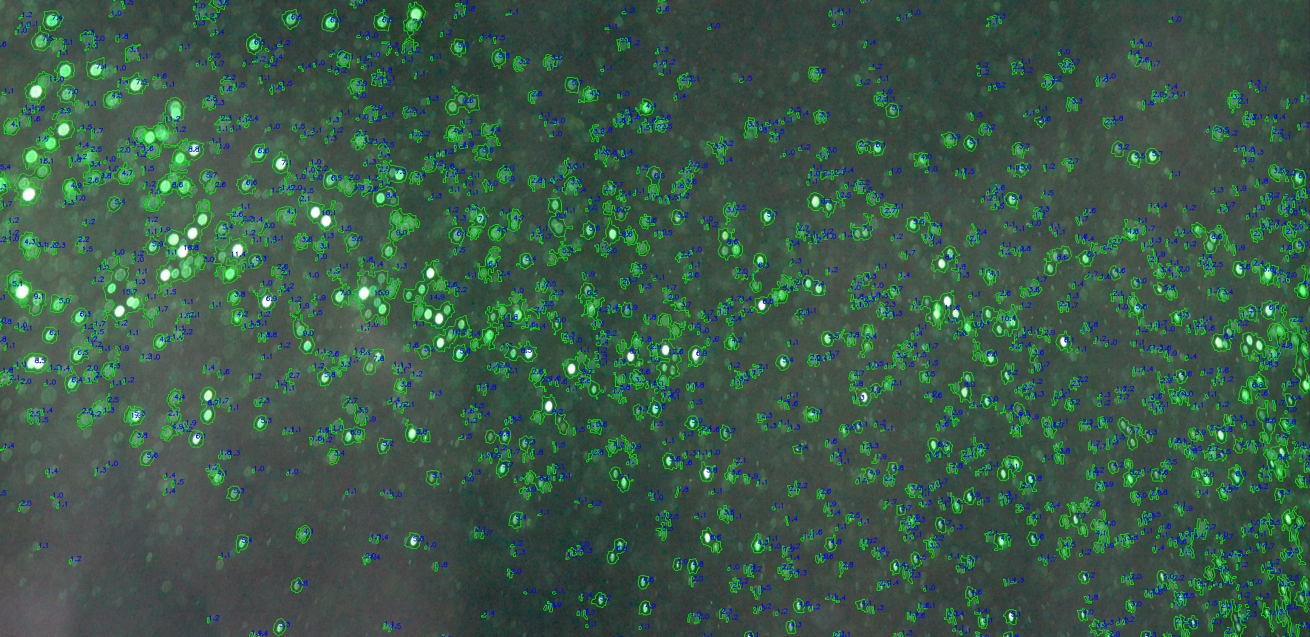
From Research Question to Real-World Engineering Innovexis was founded in 2023 out of doctoral research into multiphase flow and separation, built on a background in engineering research and technology development. The research began with one question: what happens at the smallest scale that determines how the whole system performs? Answering it meant building measurement capability that did not exist off the shelf. Imaging methods to size droplets inside operating separators, automated analysis to turn thousands of frames into usable distributions, and a bubble generator design.
That toolkit is the business now. We work through client problems the same way we worked through the research: measure what is happening, find the mechanism behind it, then design from there.
Our principle is simple:
Our Approach
From Engineering Question to Validated Solution. Every project begins with a question. We investigate the problem, generate evidence, develop the right solution and validate it against reality.
-
01
Understand the Engineering Challenge
We begin by understanding the problem, the operating environment, performance requirements and constraints. Together, we define what needs to be measured, understood or developed.
-
02
Find Out What Is Really Happening
We investigate the physical system using experimental methods, engineering analysis, advanced imaging and data-driven techniques.
-
03
Turn Evidence Into Engineering Understanding
We combine experimental evidence with CFD, multiphase modelling, data analysis and engineering calculations to understand system behaviour and evaluate potential solutions.
-
04
Turn Engineering Insight Into a Solution
We translate the findings into engineering designs, process improvements, prototypes or new technologies, considering performance, manufacturability, scalability and practical requirements.
-
05
Test the Solution Against Reality
We test, compare and refine the solution using experimental evidence and defined performance requirements. The objective is not simply to produce a model but to develop something that works in the real world.
What Drives Our Engineering
To solve complex engineering problems through experimental research, quantitative measurement, computational modelling and practical technology development. We turn engineering questions into measurable evidence, validated understanding and practical solutions.
To become a recognised centre of expertise for particle characterisation, multiphase engineering and technology development, connecting research with real-world engineering applications.
-
Evidence First
We believe engineering decisions should be grounded in measurement, analysis and scientific evidence.
-
Engineering Excellence
We apply rigorous engineering methods to develop reliable, practical and technically sound solutions.
-
Curiosity
We investigate the mechanisms behind complex behaviour rather than simply accepting assumptions.
-
Collaboration
The best engineering solutions come from combining different expertise. We work with clients, researchers and technology partners to solve difficult problems
-
Responsible Innovation
We develop technology with practical, environmental and long-term considerations in mind.
-
Knowledge Sharing
We turn research and engineering experience into practical knowledge that can be shared with clients, researchers and industry.